
International Hybrid conference
KAVALA, 6-7–8–9 May 2026
Where Governance Meets Security.
Where Education Builds Resilience.
Where Strategy Shapes the Future.
The ICPCDGR 2026 invites scholars, researchers, policymakers, practitioners, security professionals, postgraduate students, and civil society actors to contribute to this high-level international dialogue by submitting abstracts for oral
ICPCDGR 2026 provides a strategic academic and policy platform at the intersection of risk governance, homeland security, crisis leadership, technological innovation, and resilience planning.
Conference Theme
ICPCDGR 2026 focuses on advancing integrated governance approaches in an era of:
The thematic architecture of ICPCDGR 2026 reflects internationally recognised pillars in crisis, disaster, and security studies and is structured around an integrated and interdisciplinary approach. Core themes include:
- Risk Governance and Strategic Planning;
- Crisis and Emergency Management;
- Homeland Security and Public Safety;
- Environmental and Natural Disaster Management;
- Cybersecurity and Critical Infrastructure Protection;
- Public Health and Health Security;
- Humanitarian Response and International Relief;
- Leadership and Decision-Making in Crises;
- Technological Applications and AI in Crisis Management;
- Humanitarian Engineering;
- Legal, Ethical and Policy Frameworks;
- Psychology and Human Behaviour in Crisis;
- Education in Emergencies;
- Cultural Sector Recovery;
- Critical Infrastructure Protection;
- Hybrid Threats and Security Dynamics;
- Climate Risk and Disaster Preparedness;
- Intelligence, Cybersecurity and Information Warfare;
- Borders, Migration and Human Security; and the internationalisation of postgraduate education in security and resilience studies.
What We Are Looking For
We welcome original, interdisciplinary, policy-relevant, and practice-oriented contributions aligned with the conference tracks.
Submissions may include:
- Empirical research and systems modelling
- Risk analytics and AI-driven solutions
- Governance and public policy studies
- Security and homeland protection frameworks
- Implementation science and institutional reform analysis
- Crisis communication and coordination models
- Health security and emergency preparedness studies
- Community-based resilience initiatives
- Case studies from operational practice
- Pilot projects and field implementation lessons
Contributors are encouraged to demonstrate how governance, security, technology, education, and operational practice intersect to produce scalable and evidence-informed resilience outcomes.
Types of Contributions
ICPCDGR 2026 welcomes:
- Oral Presentations
- Poster Presentations
- Special Session Proposals
- Policy Roundtables
- Thematic Panels
- Simulation-based Workshops
All abstracts will undergo review by the ICPCDGR Scientific Committee.
Publication Opportunities
Accepted abstracts will:
- Be included in the official Conference Programme
- Be published in a Book of Abstracts with ISBN
- Receive a Certificate of Presentation
Authors who wish to further develop their work may optionally submit a full paper after the conference.
Selected high-quality manuscripts will be invited for submission to Special Issues in:
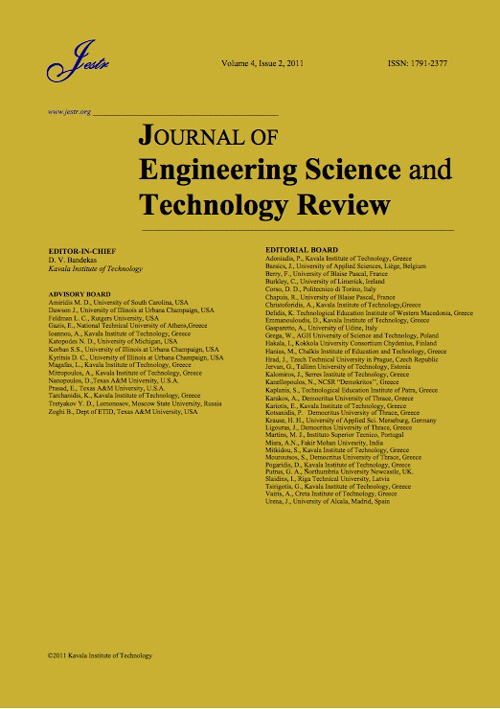
The Journal of Engineering Science and Technology Review (JESTR) under the theme “Disaster Governance, Risk Analytics and Resilience Systems”
(Deadline for manuscript submissions: 28 June 2026)
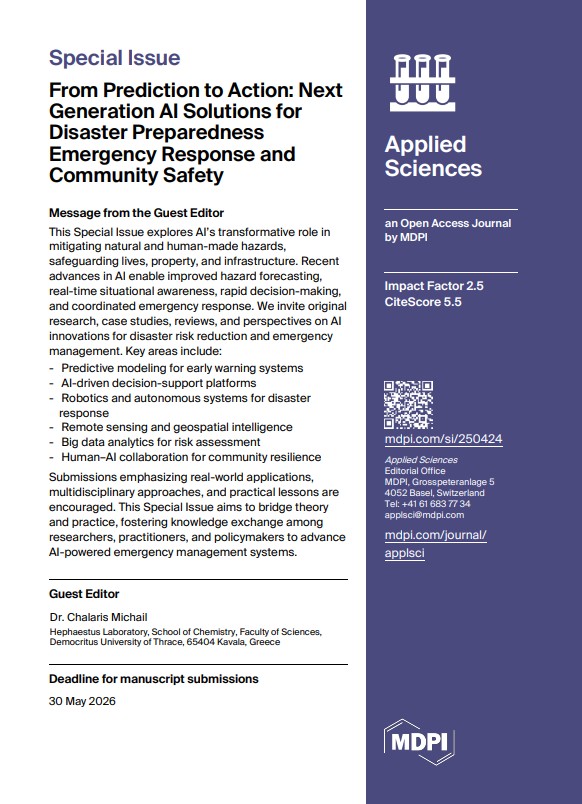
Applied Sciences (MDPI) under the Special Issue “From Prediction to Action: Next Generation AI Solutions for Disaster Preparedness, Emergency Response and Community Safety”.
(Deadline for manuscript submissions: 30 May 2026)
Full paper submission is entirely optional and is not required for conference participation.
Authors are responsible for following the submission requirements of their chosen journal, and any applicable publication fees must be covered by the authors.
Additional Publication Opportunity
Selected high-quality manuscripts may also be considered for inclusion as book chapters in the forthcoming volume:
Risk Analysis: Assessment Methods, Decision Frameworks, and Safety Strategies
Published by Nova Science Publishers
This edited volume aims to bring together interdisciplinary contributions addressing modern approaches to risk assessment, decision-support methodologies, disaster risk management, safety engineering, and resilience strategies across technological, environmental, and societal domains. Relevant contributions presented at the conference may be invited for submission as book chapters.
Important Dates
- Chapter Due Date: July 20, 2026 (contributors will send the chapter’s abstract directly to the conference chair)
- Completed Manuscript Submission Date: October 31, 2026
Participation in this book project is optional and independent of conference participation. Authors are responsible for preparing manuscripts according to the publisher’s submission guidelines.
Special Session Proposals
ICPCDGR 2026 invites proposals for:
- Curated thematic panels
- Multi-stakeholder roundtables
- Policy debates
- Crisis simulation sessions
- Academic–practice dialogue workshops
A formal proposal must be submitted by a designated session lead (Convener, Chair, or Coordinator). The proposer is responsible for coordinating the session participants and communicating session details to the organizing committee.
Submission of presentation materials is not required at the proposal stage. Detailed guidelines will be provided upon acceptance.
Young Researchers & Emerging Professionals Track
ICPCDGR 2026 encourages participation from early-career researchers, postgraduate students, and emerging professionals in the fields of crisis governance, disaster management, and security studies.
Eligible contributors typically include:
- Master’s students
- PhD candidates
- Researchers who received their PhD within the last four years
- Early-career practitioners in disaster risk, emergency management, or homeland security
- Scholars presenting for the first time in an international academic forum
Career interruptions due to illness, caregiving responsibilities, or maternity leave will be considered in eligibility assessments.
Selected participants may be highlighted within a dedicated Emerging Scholars segment of the conference programme.
Submission Platform
Abstract and proposal submissions will be managed through the official ICPCDGR online submission system (details to be announced).
Only registered participants will be eligible to submit abstracts and proposals.
Important Dates
2 March 2026 – 5 April 2026
Abstract Submission (Oral & Poster) and Special Session Proposal Submission
5 April 2026
NEW DEADLINE 26 April 2026
Deadline for Abstract and Special Session Submission
8 April 2026
NEW DEADLINE 28 April 2026
Notification of Acceptance
26 April 2026
Regular Registration Deadline
3 May 2026
Final Conference Program Announcement
3 May 2026
Presentation Material Submission Deadline (Oral)
6–9 May 2026
ICPCDGR 2026 Conference Dates
28 June 2026
Final Full Paper Submission (Optional – JESTR Track)
Review Process
All abstracts and session proposals will be reviewed by the ICPCDGR Scientific Committee based on:
- Relevance to conference themes
- Academic rigor
- Policy and practical relevance
- Innovation and originality
- Interdisciplinary contribution
Authors will be notified by email upon completion of the review process.
Join the Strategic Dialogue
ICPCDGR 2026 is more than a conference.
It is a structured platform for shaping governance models, strengthening institutional resilience, advancing security-informed academic education, and fostering global collaboration in an era of systemic risk.
We invite you to contribute your research, experience, and strategic insights to a global academic and policy community committed to advancing integrated crisis governance and resilience planning.