
Welcome note from the Conference Chair
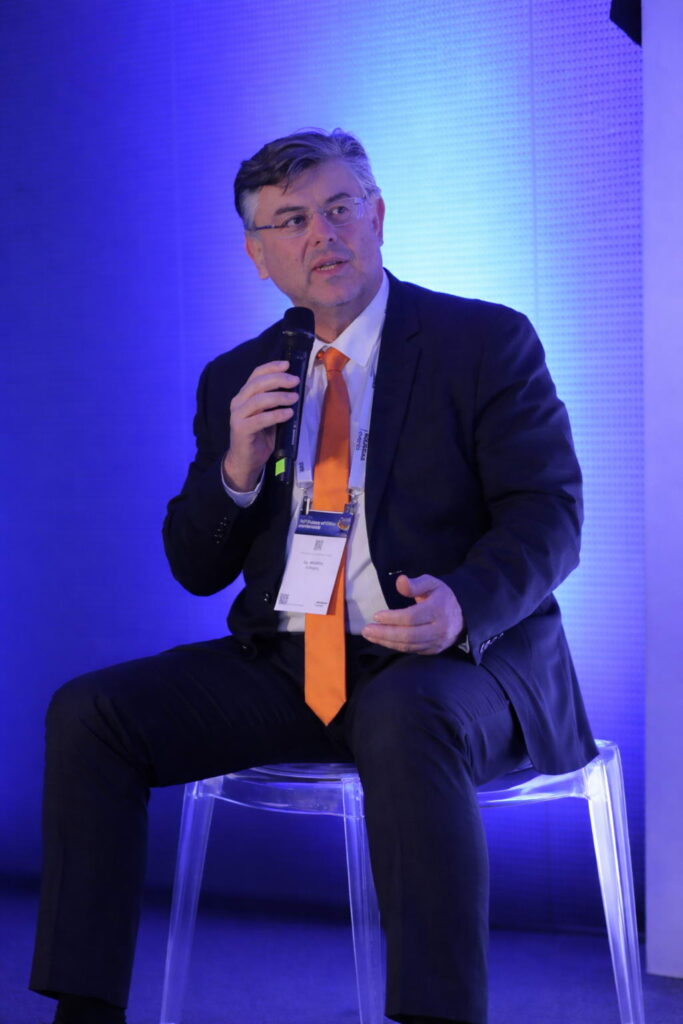
It is with great pleasure and a deep sense of responsibility that I welcome you to the International Hybrid Conference on Crisis and Disaster Governance, Planning and Resilience: Integrating Risk and Security within International Postgraduate Education (ICPCDGR 2026).
In a global context increasingly defined by climate-driven extreme events, hybrid and asymmetric threats, cybersecurity risks, infrastructure vulnerability, public-health emergencies, and geopolitical instability, the need for integrated and forward-looking governance frameworks has never been more urgent. These challenges transcend traditional disciplinary boundaries and demand new forms of cooperation between science, policy, technology, and operational practice.
ICPCDGR 2026 has been designed to address this need by bringing together scholars, practitioners, policymakers, and postgraduate students from around the world to explore innovative solutions and strategic frameworks at the intersection of risk governance, security studies, crisis management, disaster planning, and resilience.
At its core, the conference reflects a broader academic vision: to connect research with real-world decision-making, strengthen international postgraduate education in crisis and resilience studies, and cultivate the next generation of leaders capable of navigating systemic and interconnected global risks.
ICPCDGR 2026 builds upon the strategic academic collaboration between the Democritus University of Thrace (Greece) and York University (Canada), developed within the framework of Greece 2.0 – the Recovery and Resilience Facility and the Universities of Excellence Initiative. This initiative promotes the internationalisation of higher education, the digital transformation of academic programmes, and the strengthening of advanced postgraduate competences with global relevance that link academic research with policy and practice.
This conference serves as more than an academic gathering. It is a strategic platform for dialogue and collaboration, designed to connect theory with practice and research with policy-making. Through keynote lectures, thematic sessions, and interdisciplinary exchanges, participants will explore cutting-edge research and practical frameworks addressing risk governance, crisis leadership, disaster planning, homeland security, technological innovation, and resilience-building strategies.
The thematic structure of the conference reflects the multidimensional nature of contemporary risks. The conference addresses themes such as risk governance, crisis and emergency management, cybersecurity, artificial intelligence in crisis response, public health security, humanitarian logistics, environmental resilience, and hybrid threats.
It also engages leadership in crises, psychological resilience, governance and policy frameworks, and the internationalisation of postgraduate education in security and resilience studies. By integrating insights from the natural sciences, engineering, social sciences, policy studies, and emerging technologies, the conference fosters a genuinely interdisciplinary ecosystem of knowledge exchange and innovation.
Beyond its scientific excellence, the conference offers participants a unique opportunity to experience the event in one of the most distinctive settings in the Mediterranean. It is hosted in the historic and vibrant coastal city of Kavala, Greece, a strategic crossroads between Europe, the Balkans, and the Eastern Mediterranean.
With its unique seafront character, rich cultural heritage, and inspiring landscapes overlooking the Aegean Sea, Kavala provides an environment where intellectual exchange is naturally complemented by substantive networking opportunities, cultural exploration, and moments of reflection by the sea.
Participants will also have the rare opportunity to combine participation in a high-level international scientific conference with the experience of an exceptional coastal destination — a setting that stimulates creativity, encourages dialogue, and fosters lasting academic partnerships.
ICPCDGR 2026 aims to strengthen international research collaboration, support the evolution of postgraduate education in crisis and resilience studies, and contribute to the development of evidence-based governance models capable of responding to the complex challenges of our time.
In doing so, it positions Southeast Europe as a dynamic hub for advanced risk governance, crisis coordination, security-informed resilience planning, and interdisciplinary academic cooperation.
I warmly invite you to be part of this important international gathering — not simply as attendees, but as active contributors to a global dialogue on resilience, security, and governance.
Join us in ICPCDGR 2026
Where Governance Meets Security.
Where Education Builds Resilience.
Where Strategy Shapes the Future.
With my warmest regards,
Associate Professor Michail Chalaris
Conference Chair
International Hybrid Conference on Crisis and Disaster Governance, Planning and Resilience: Integrating Risk and Security within
International Postgraduate Education (ICPCDGR 2026)
Democritus University of Thrace, Greece